
Flood Insurance for Coastal South Carolina
★★★★★ 4.9/5 from 141+ Google Reviews
Coastal Insurance Brokers is an independent agency based in Mount Pleasant, serving homeowners and property buyers throughout coastal South Carolina. We compare NFIP and private flood insurance options for homes from Charleston and Mount Pleasant to Kiawah, Seabrook, the Grand Strand and other coastal communities. Whether you already own the property or you're buying from out of state, we can help you understand the available coverage, limits, deductibles and pricing for that specific home.
Already have flood insurance? Compare your current policy →
Flood Insurance Across Coastal South Carolina
We help homeowners and buyers with flood insurance up and down the South Carolina coast — in communities such as Mount Pleasant, Charleston, Daniel Island, Isle of Palms, Sullivan's Island, Kiawah Island and Seabrook Island, and along the Grand Strand in Myrtle Beach and North Myrtle Beach, served by our North Myrtle Beach office. Those are examples, not a boundary — if your property is on or near the South Carolina coast, we can review your options. Our main office is in Mount Pleasant.
Flood Insurance Discounts by Charleston-Area Jurisdiction
Every participating community earns a FEMA Community Rating System (CRS) class based on its floodplain management efforts — and that class sets a real discount on NFIP flood premiums. The discount depends on where the property sits, not just the flood zone. Here's how the Charleston-area jurisdictions currently compare:
| Jurisdiction | CRS Class | NFIP Discount |
|---|---|---|
| Unincorporated Charleston County | 2 | 40% |
| Folly Beach | 3 | 35% |
| Sullivan's Island & Isle of Palms | 5 | 25% |
| City of Charleston | 6 | 20% |
| Town of Mount Pleasant | 6 | 20% |
| North Charleston | 7 | 15% |
CRS classes are reviewed periodically by FEMA and can change — several Charleston-area jurisdictions have improved their scores in recent years. This table reflects current published classes as of mid-2026; we confirm the exact discount for your specific property and jurisdiction when we run your quote.
NFIP vs. Private Flood Insurance: How They Compare
Many coastal South Carolina homeowners consider both the National Flood Insurance Program and private flood insurance. Private flood can be a better fit for some homes, particularly where higher limits or different coverage options are needed, depending on the property and available market. Here's the real difference:
| Factor | NFIP | Private Market |
|---|---|---|
| Building coverage limit | $250,000 | Higher limits available (varies by carrier) |
| Contents coverage limit | $100,000 | Higher limits available |
| Typical waiting period | 30 days | As short as 10 days (varies by carrier) |
| Backed by | Federal government (FEMA) | Private insurers & reinsurers |
| CRS jurisdiction discounts apply | Yes | No — priced independently |
| Best fit for | Standard-value homes, straightforward closings | High-value homes, tight closing timelines, homes needing coverage above NFIP caps |
Neither option is automatically better — the right choice depends on your property's value, your flood zone, and your timeline. We compare both live options side by side before you decide. For a deeper look, read NFIP vs. Private Flood Insurance.
Flood Zones and Elevation Certificates
FEMA flood maps divide coastal properties into risk categories that affect both your premium and your mortgage lender's requirements. Zones A and AE mark the standard 100-year floodplain, where lenders typically require flood insurance. Zones V and VE are coastal high-hazard zones exposed to storm-surge wave action and carry the highest premiums. Zone X covers moderate- to minimal-risk areas — flood insurance usually isn't required there, but it's often available at a much lower rate, and a meaningful share of NFIP claims nationally come from outside the mapped high-risk zones.
An elevation certificate, which documents your home's lowest floor elevation relative to the base flood elevation, is often the single biggest factor in your rate. We pull your actual rating factors before quoting instead of estimating from a zone map alone.
Flood insurance is a separate policy from wind and hurricane coverage. See our Wind & Hurricane Insurance guide for how named-storm deductibles work and what your homeowners policy does and doesn't cover during a storm.
Is $250,000 Enough to Rebuild Your Coastal Home After a Flood?
Most people who've had an NFIP policy for years know what they pay. Fewer have checked what it would actually pay them back. For a standard NFIP Dwelling Form on a single-family home, building coverage is capped at $250,000 and contents coverage at $100,000.
NFIP pays covered claims subject to the policy's terms and purchased limits — the issue isn't whether NFIP pays. The real question is whether that limit is appropriate for the potential covered repair or reconstruction cost of your specific home. For many higher-value coastal South Carolina properties, that gap is worth understanding before a loss, not after one.
This isn't about your home's market value or purchase price — it's about what it would actually cost to repair or rebuild it, and whether your current coverage gets you there. Private flood insurance can offer higher building and contents limits than NFIP, along with different deductible and coverage options, depending on the carrier and your specific property. Sometimes NFIP is still the right fit. Sometimes it isn't. The only way to know is to look at what you actually have.
Already Have Flood Insurance? Let's Compare It.
If you already have NFIP or another flood policy, send us your current declarations page. We'll review your building limit, contents limit, deductibles, and premium, then compare it against available private flood options for your property.
Optional: upload your declarations page on the form. If your current policy is still the right fit, we'll tell you.
Why Coastal Homeowners Choose Coastal Insurance Brokers
We live and work on the South Carolina coast — so when a storm heads our way, you're talking to someone who knows the area, not a national call center.
Charleston County Flood Risk
Charleston County has a long history of hurricane, storm-surge and tidal flooding, and flood insurance is a common part of owning or buying a home here.
Standard homeowners policies typically exclude flood damage, so flood protection usually comes from a separate flood policy — or, with some carriers, an endorsement.
As an independent agency, we can compare NFIP and private flood options so you can choose what's right for your home.
Why Flood Insurance Matters Along the South Carolina Coast
Flood risk isn't limited to the areas FEMA maps as high-risk. Storm surge, tidal flooding and heavy rain can all bring water into coastal neighborhoods — including homes that have never flooded before.
We review the property, flood zone and available carrier options — then compare coverage based on the specific home.
Frequently Asked Questions
When is flood insurance required for a coastal South Carolina home?
Flood insurance is generally required when a home is in a FEMA Special Flood Hazard Area (zones beginning with A or V, such as AE and VE) and is financed through a federally regulated or federally backed lender. Lenders can also require flood coverage outside those zones, so if you're buying, confirm the requirement with your lender before closing. Even where flood insurance isn't required, flooding can occur outside FEMA Special Flood Hazard Areas. In Charleston County, for example, tidal creeks, storm surge and high-tide flooding mean flood risk isn't limited to mapped zones.
How much does flood insurance cost?
Flood insurance premiums vary widely based on your flood zone, elevation, property value and coverage limits. Homes in lower-risk zones such as Zone X often cost less than homes in higher-risk zones such as AE and VE.
Two things that can significantly lower your NFIP premium in Charleston specifically: an elevation certificate, and CRS discounts. City of Charleston residents may qualify for up to a 20% NFIP discount. Unincorporated Charleston County residents may qualify for up to 40% off through the county's Class 2 CRS standing — one of the best discount programs in the state.
Private flood options may also be available, depending on the property. The only way to know your number is to get a quote — call us at 843-471-2621. For a deeper breakdown, see how much flood insurance costs in South Carolina.
Do I need flood insurance if I’m not in a high-risk zone?
Yes — and this is one of the most common misconceptions we see in Charleston. More than 25% of flood claims nationally come from properties outside designated high-risk flood zones. In Charleston, that number is especially relevant because flooding doesn't follow FEMA zone boundaries.
Tidal creeks, storm drainage systems, and Charleston Harbor all create flooding pathways into neighborhoods that aren't mapped as high-risk. As sea levels rise and high-tide flooding events increase — NOAA projects Charleston could see 60 to 75 annual flood events by 2050 — lower-risk zones are flooding more frequently than they used to.
Zone X flood insurance is typically much less expensive than Zone AE or VE coverage. The cost of being wrong is far higher than the cost of a policy.
How quickly can coverage start?
NFIP policies generally have a 30-day waiting period, subject to certain exceptions. Private flood waiting periods vary by carrier and policy.
Neither option protects you once a named storm is approaching. South Carolina's hurricane season runs June through November. The time to get covered is before there's a storm in the Gulf — not after.
Call us today at 843-471-2621 and we can have your quote ready within one business day.

Get a Quote
*By filling out this form, I authorize Coastal Insurance Brokers to communicate with me via text messaging.
Why Choose Coastal Insurance Brokers?
- Local Expertise — Mount Pleasant and North Myrtle Beach offices serving the South Carolina coast.
- 25+ Carriers Compared — We shop the market to match price and protection.
- Fast, Friendly Service — Real people, quick answers, help with claims.
Related Blog Posts
Check out our Insurance Blog for more information about Flood Insurance in SC Coastal Areas.

Winter’s Coming to Coastal South Carolina — 3 Insurance Moves to Protect Your Home, Auto & Business
Protect Your Lowcountry Boat: What Every Mt. Pleasant & Charleston Owner Must Know About Insurance
Don’t Wait for the Storm: 3 Flood Insurance Essentials Every Mt. Pleasant & Charleston Homeowner Needs
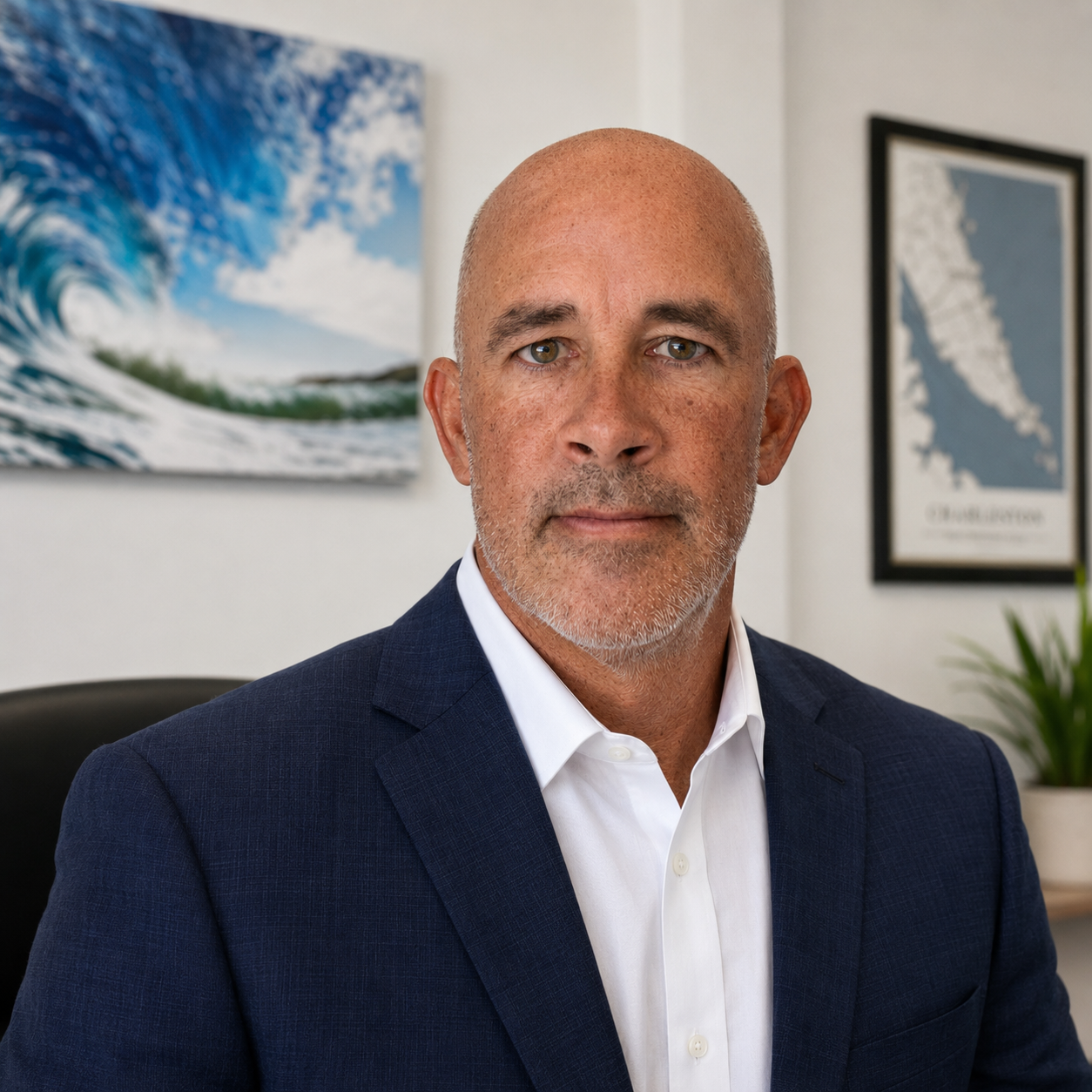
John Cosgrove
Owner & Principal Insurance Advisor · Licensed Property & Casualty Insurance Agent, South Carolina — License #446274
John Cosgrove is the Owner & Principal Insurance Advisor at Coastal Insurance Brokers, an independent insurance agency serving Mount Pleasant, Charleston, North Myrtle Beach, and communities throughout South Carolina's coast. John relocated to South Carolina from Bucks County, Pennsylvania, and entered the insurance industry in 2006, working with Nationwide and later Prudential before launching Coastal Insurance Brokers in May 2014. He has been a licensed South Carolina Property & Casualty agent since 2009 (License #446274) and also holds a South Carolina surplus lines broker license, giving the agency access to specialty and excess-and-surplus markets for coastal risks that standard carriers may decline.
Reviewed by John Cosgrove. Last Updated: July 11, 2026
Don't wait for the next storm.
Hugo, Matthew, Florence, Dorian and Ian have all affected the South Carolina coast. NFIP policies generally have a 30-day waiting period (with limited exceptions, such as coverage required at a loan closing), and private flood waiting periods vary by carrier — don't wait until there's a storm in the forecast.
Call us now: 843-471-2621
Visit our Mount Pleasant office or our North Myrtle Beach office, or see our Wind & Hurricane Insurance overview for storm-related coverage.