
Coastal property is not just more expensive to insure. It is underwritten differently, priced differently, and governed by rules that catch people out — particularly people who have owned property somewhere else and reasonably assume it works the same way here.
We’re an independent agency with offices in Mount Pleasant and North Myrtle Beach. We place coastal property every week, across Charleston, the Grand Strand, and the barrier islands between them. This is what we tell people at the beginning.
Start With Your Situation
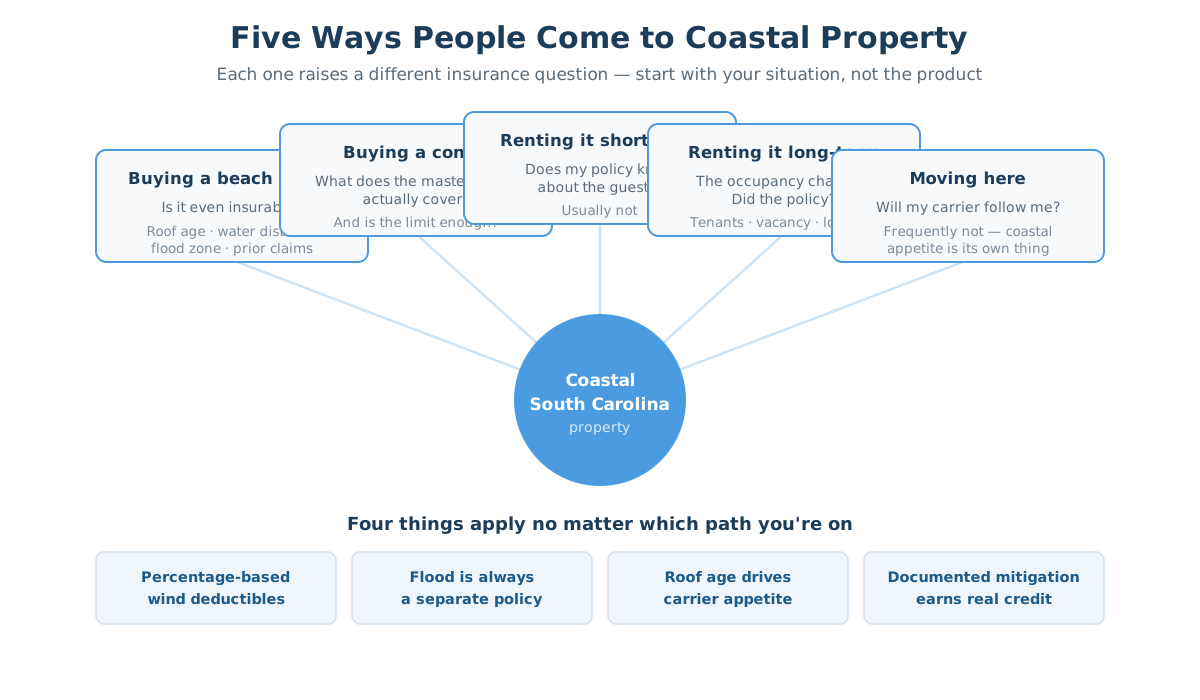
Insurance questions get much easier once you know which conversation you’re actually in.
You’re buying a beach house.
The property has to be insurable before anything else matters, and that’s answerable during due diligence rather than at closing. Roof age, distance to water, prior claims, and flood zone determine which carriers will even look at it.
→ Buying a beach house in South Carolina
You’re buying a condo.
The association’s master policy decides what your own policy has to do — and the two questions that matter are what it covers and whether its limit reflects what the building would cost to rebuild today.
→ Buying a coastal South Carolina condo
You’re renting the property out short-term.
A standard homeowners policy generally excludes paying guests. Airbnb and VRBO protections are a backstop, not a policy. And on the Grand Strand, city rules differ meaningfully between North Myrtle Beach and Myrtle Beach.
→ Renting your coastal property on Airbnb or VRBO
You’re renting it out long-term.
The day a tenant moves in, your homeowners policy stops describing the property accurately. Occupancy is what carriers underwrite, and it’s changed.
→ Renting out your coastal property
You’re moving here.
Your current carrier may not write coastal South Carolina at all. Wind deductibles work differently, flood is separate, and there’s a vehicle registration deadline waiting on the other side of the move.
→ Moving to coastal South Carolina
Four Things That Are Different Here
These apply regardless of which situation you’re in.
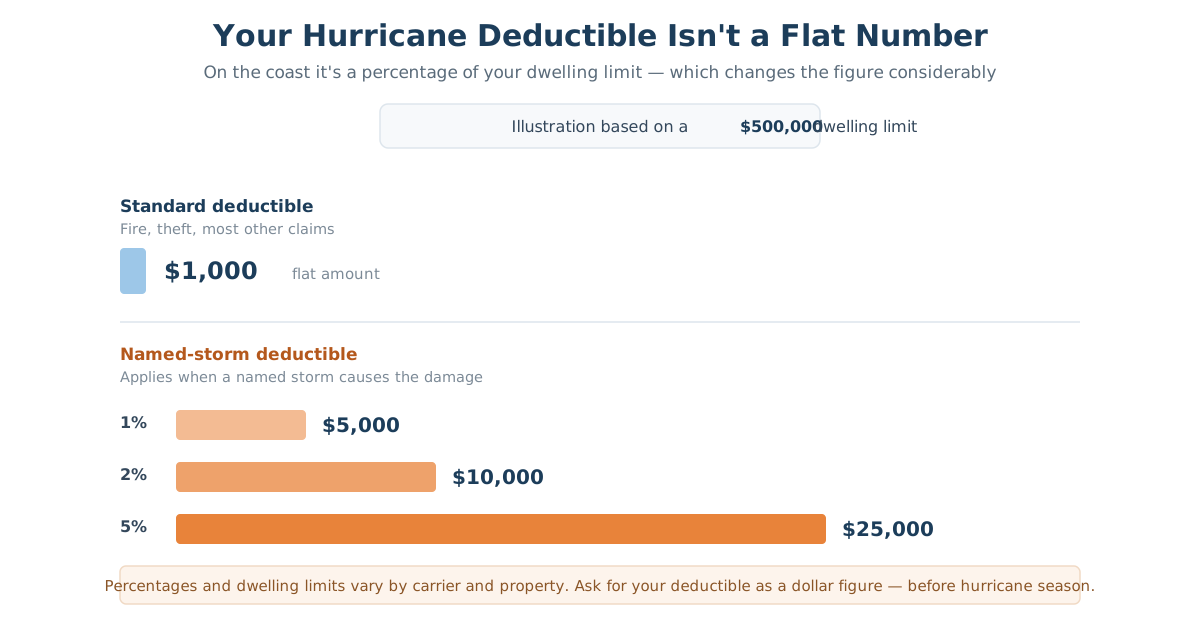
Wind and named-storm deductibles are percentage-based. Not a flat $1,000 — a percentage of your dwelling limit. On a coastal home that’s a substantially larger number than most people expect, and it’s the single most common surprise for anyone moving from an inland state. Know yours as a dollar figure.
Flood is always a separate policy. Homeowners insurance excludes flood everywhere, but inland that’s mostly academic. Here it isn’t. Properties outside high-risk zones still flood from heavy rain, storm surge, and tidal events, and lender requirements follow the building’s flood zone.
Roof age carries more weight than almost any other factor. Coastal carriers have tightened sharply. A roof that would be unremarkable inland can determine whether a property is writable at all.
Documented mitigation earns real credit. Roof-to-wall connections, roof deck attachment, opening protection, and roof covering type reduce premium — but only if they’re documented on an inspection and filed with the carrier. Many homes already qualify and never claimed it.
→ Wind mitigation discounts in South Carolina
Why Standard Carriers Decline Coastal Property
It’s worth understanding, because it happens routinely and it isn’t personal.
Carriers set an appetite — a definition of the risk they want — and coastal property frequently sits outside it. Distance to water, roof age, construction type, prior claims on the address, and the age of electrical, plumbing, and HVAC systems all feed that decision. Appetites also change. A carrier writing freely on the coast one year may pull back the next, and non-renewal often reflects that rather than anything about the customer.
When standard markets decline, surplus lines and specialty carriers write this business. Reaching those markets requires an agency with direct access. That’s the practical reason coastal owners work with independent agencies rather than single-carrier agents — a captive agent has one appetite to offer, and on the coast the answer is frequently no.
The Areas We Serve
Charleston area — Charleston, Mount Pleasant, Isle of Palms, Sullivan’s Island, Folly Beach, James Island, Johns Island, West Ashley, Daniel Island, Summerville, Goose Creek, Awendaw, McClellanville
→ Insurance in Mount Pleasant · Insurance in Charleston
Grand Strand — North Myrtle Beach, Myrtle Beach, Cherry Grove, Little River, Longs, Conway, and Horry County
→ Insurance on the Grand Strand · Our North Myrtle Beach office
Frequently Asked Questions
Is coastal South Carolina hard to insure right now?
Harder than inland, and harder than it was a few years ago. Carriers have tightened on roof age and proximity to water, and some have reduced coastal writing. It remains very much insurable — it takes access to more markets than a single carrier can offer.
Why is my hurricane deductible a percentage?
Coastal carriers apply named-storm deductibles as a percentage of the dwelling limit rather than a flat amount. On a higher-value coastal home the resulting figure is significant, and it’s worth knowing in dollars before hurricane season rather than during it.
Do I need flood insurance if I’m not in a high-risk zone?
Every property sits in a flood zone; some are lower risk. Lenders require coverage in high-risk zones. Outside them it remains a genuine exposure on the coast — and coverage is generally less expensive there.
Can I insure a South Carolina property if I live in another state?
Yes. The policy follows the property’s location, not your residence. We work with out-of-state owners regularly, by phone and email.
My carrier non-renewed my coastal home. What now?
Non-renewal usually reflects a carrier’s appetite changing rather than anything about you. An independent agency can move the placement to a market that wants the risk, including surplus lines carriers standard agencies can’t reach directly.
How much does coastal insurance cost?
It depends heavily on distance to water, construction, roof age, coverage limits, and deductible structure. General figures aren’t useful for a specific property. A quote on the actual address is the only reliable answer, and it’s free.
Who We Are
Coastal Insurance Brokers is an independent insurance agency serving coastal South Carolina, with offices in Mount Pleasant and North Myrtle Beach. We compare carriers across the standard, high-value, and surplus lines markets, including markets most local agencies cannot access directly.
We place coastal property every week, which means we know which carriers currently want this business and which have pulled back — the difference between a placement and a series of declines.
John Cosgrove, Owner & Principal Insurance Advisor
Licensed South Carolina Property & Casualty Agent, License #446274
South Carolina Surplus Lines Broker
→ Meet our licensed agents
Not Sure Which Situation You’re In? Start There.
Tell us what you’re doing — buying, renting it out, moving here — and we’ll tell you what actually applies to your property. No cost, no obligation.
Call (843) 471-2621 · Text (843) 834-6408